Italy has always been renowned as a cultural epicenter. We’re not only talking about fashion, but about arts and architecture as well. The country has creativity running on its dna and many of the greats have called Italy home. This is the case of the great Alberto Affinito, a designer that not only creates timeless and unique pieces, but that also has a unique and specific approach to design.
Ever since I came across his brand in the last fashion week, I knew I needed to go deeper into the ethos, into the essence of his designs and brand. Luckily, the opportunity came and not only did I get the chance to talk to him about his brand, his vision and his essence; but also, we got a very first look at his new store in Milano, right at the heart of the Navigli area. The concept behind it is art meets introspection. It talks about the passage of time and how things are more than meets the eye. Apart from the new store, Alberto opened his “lab” right next to it, giving the chance to costumers to also appreciate the magic behind the collections.
A trailblazer on his own right, he’s defying the concepts of fashion and how fabrics tell a story. Not only giving us a breath of fresh air, in an industry that feels a bit too repetitive at times but giving each piece a unique aura and personality. I present to you art259design by Alberto Affinito.
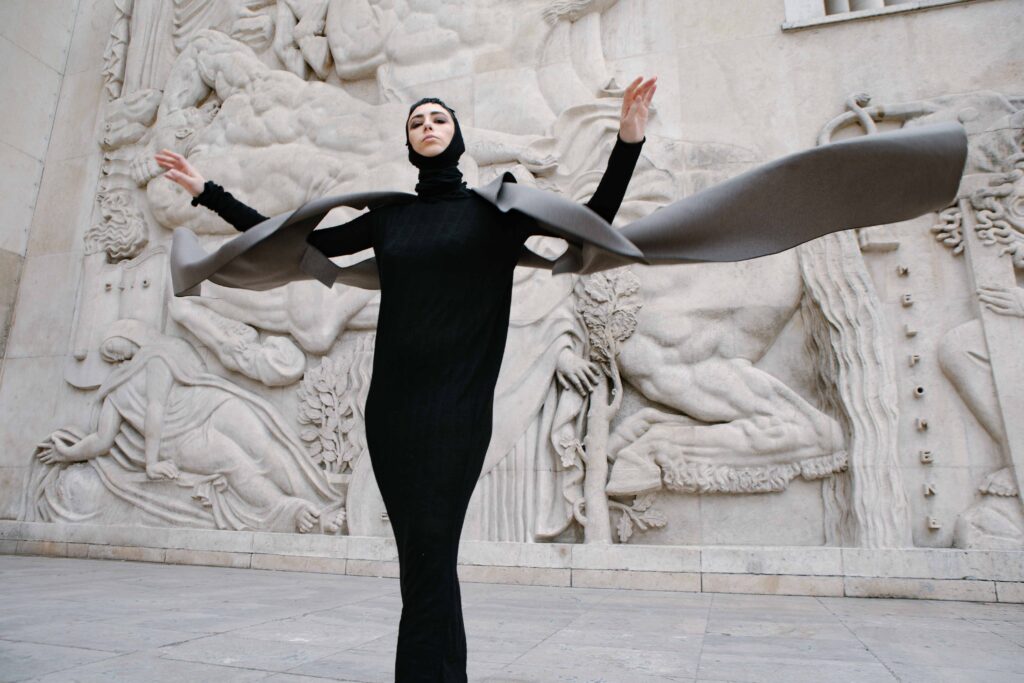
O: First, how are you doing? I imagine things are pretty hectic right now between the new store and moving the atelier.
A: I’m good. A little overwhelmed, a little tired. It’s been a really busy period and there’s a lot going on, so I’m definitely a bit stressed. More than the store itself, it’s actually the move and the relocation of the atelier that’s really put me to the test.
O: I can imagine. I actually wanted to start by talking about your approach to design because I remember reading about your particular approach, because you seem to start with fabrics rather than sketches. Could you tell me a bit more about that?
A: Well, architecture, design and art in general are really just sources of inspiration for me. Those are the things I’m passionate about. I love art, I love design in every form, interior architecture, architecture in general, so that’s where a lot of my ideas about shape come from.
When it comes to the way I work, though, it’s almost like I do things backwards. Before I have a real inspiration, I find it through the fabrics. I start by choosing the materials that I like, usually more than I actually need, and then I begin experimenting. I test them on the mannequin, I cut them, I put them together.
The fabrics that communicate well with each other, the ones that work, are the ones that I keep developing until the end. Normally, the process would be the opposite. You sketch first, you create a story, you build a concept. For me, the story comes from the fabric. I discover it while I’m working.
A lot of the first ideas happen almost by accident. You test a material, you see how it reacts, and suddenly something appears. Then you start building from there. Once you understand the right way to read a material, everything else becomes much easier. That’s the hardest part.
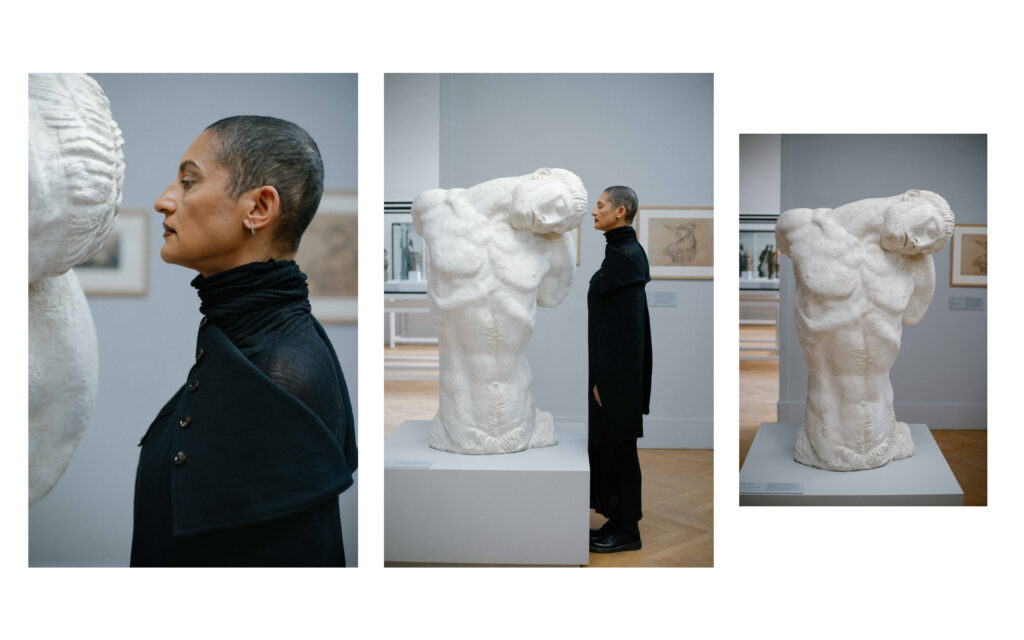
O: That’s actually beautiful. It almost sounds more like sculpture than fashion design.
A: Yeah, in a way it is. It’s a very manual process.
O: And was it always like that? Did you always enjoy working directly with materials?
A: Not at all. In the beginning I hated the sewing machine, I hated the mannequin, I hated that whole side of the process. What I loved was drawing, and honestly I still do.
But over time I realized that even though I love drawing, that’s become more of a personal passion, something I do for myself. What I’m actually best at is working with my hands. That’s something I discovered little by little, and now it’s become my way of doing things.
O: And since we’re talking about fabrics, are there any materials that you feel have become part of your design language? Maybe not necessarily something that’s always there, but something you find yourself coming back to.
A: There aren’t really any fabrics that have to be there every season because I change quite a lot from one collection to the next. That said, there are definitely fabrics that I feel more comfortable working with, materials that I know I can handle well. Every fabric is a world of its own. Sometimes I fall in love with fabrics that I already know I won’t be able to manipulate properly.
There are even fabrics that I only ever sketch because I know that, once I start working with them, nothing good is going to come out of my hands. In my collections there’s almost always some metal involved. That’s become a bit of an obsession. I love wrinkled effects more and more.
At the same time, there’s almost always a very structured fabric too, things like drill, denim, or leather. From a sculptural point of view, they’re incredibly satisfying because you can manipulate them directly on the mannequin and they’ll stay exactly where you put them. With this collection, though, I worked with silk georgette for the first time. I’d never used a transparency that bold before, and it was incredibly fun.
It’s a fabric I’ve rediscovered and I think I’ll keep exploring it in future collections because I really enjoyed working with it. The same goes for pleating. It was something we’d never used before, and it became an interesting challenge. What I know for sure is that every collection needs at least one fabric that feels new to me. Not just something that inspires me, but something that behaves differently from everything I’ve worked with before.
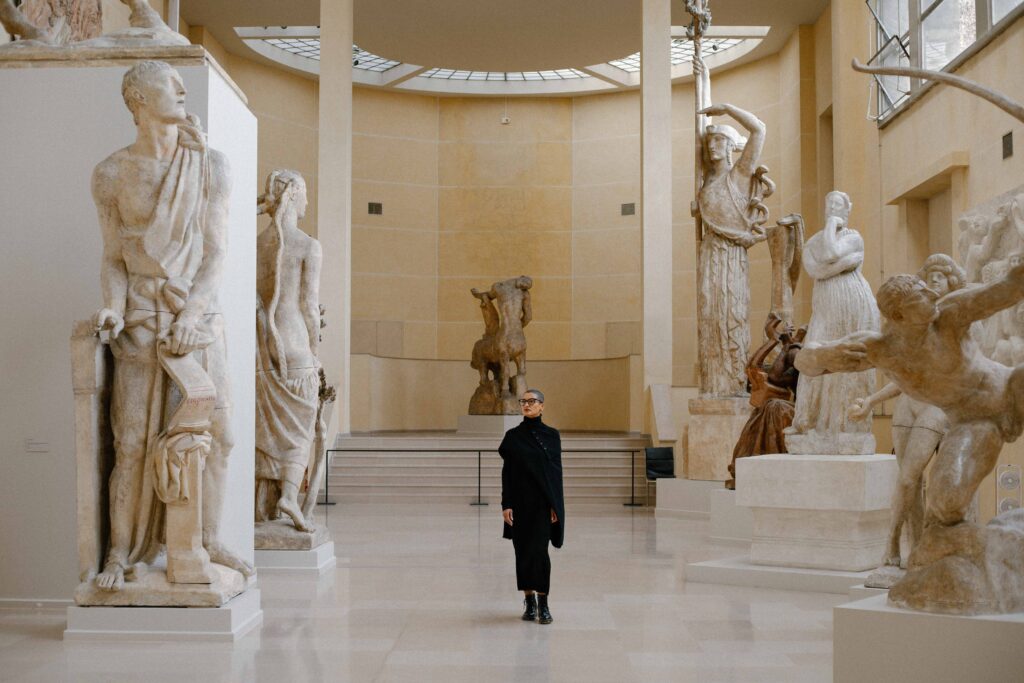
O: And speaking of this collection specifically, where did the inspiration come from?
A: That’s a difficult question because inspiration arrives in the strangest ways. Honestly, sometimes I don’t even remember exactly how it happens. Once all the fabrics arrive, I start experimenting. I spend entire days, sometimes entire nights, just trying things out.
You can spend hours working on a tiny piece of fabric because inspiration might come from the smallest detail. It can come from the way a fabric folds, the way it moves, a gathered detail, almost anything. With this collection, the starting point was actually a gathering effect. I really liked the material, but I couldn’t figure out the best way to bring out its character.
It was this cotton memory fabric, and I knew the wrinkled quality was its strongest feature. The problem was that it would wrinkle and then slowly lose the effect. After a lot of trial and error, I realized I needed a way to lock that wrinkle in place. That’s where these garments came from. And from there, the idea just kept growing. I moved from that fabric into metal-and-cotton fabrics that naturally held the wrinkled effect even more dramatically. So really, the entire collection started from a wrinkle.
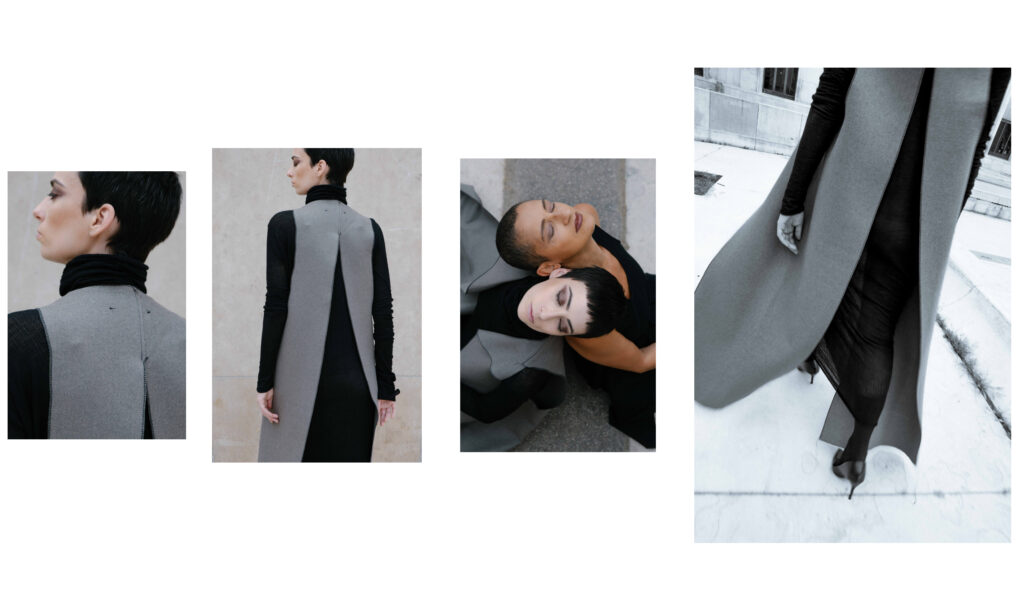
O: That’s one of the things I love about it. Some of these pieces feel almost like objects or sculptures. Are there any garments in the collection that you feel are especially representative of the project?
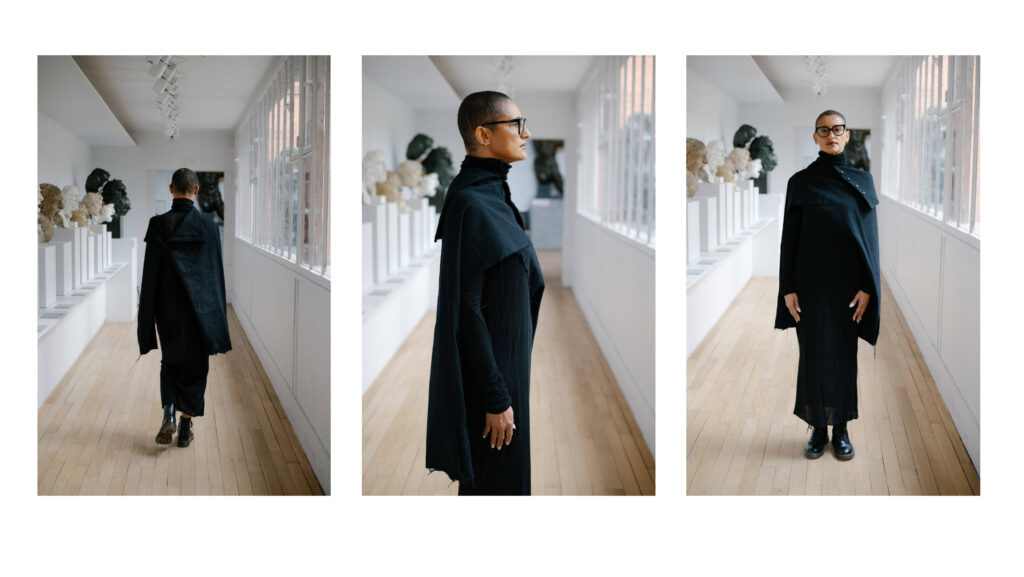
A: There are a few. For example, this piece is made from two simple rectangles of fabric. I just wrinkled certain areas to create that see-through effect. What’s interesting is that the fabric itself is incredibly light and delicate, but we worked with a thread that’s normally used for leather because I wanted the stitching to be visible.
Then there’s another piece that combines georgette and memory fabric. The sleeves are in georgette, and the body is in memory fabric. I think it’s an incredible combination because the garment is unbelievably light. When you pick it up, it almost weighs nothing. Those are probably two of the pieces that explain the collection best.
O: One thing that really stood out to me is that some of these pieces seem almost impossible to reproduce exactly. Is that intentional?
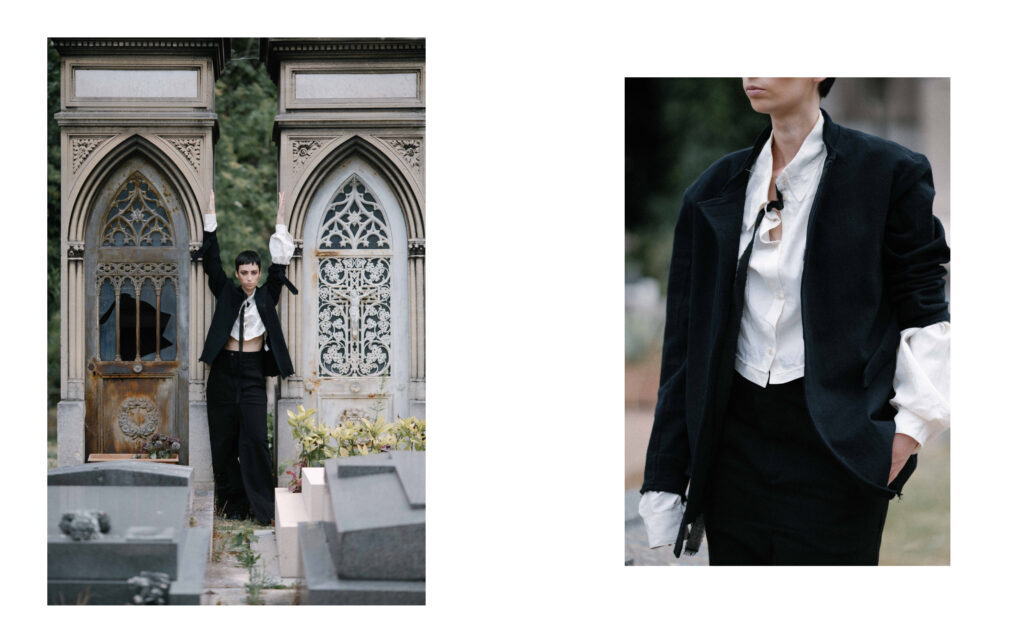
A: It is, yes. There are garments in this collection that I had to make myself, directly on the mannequin. We produced six or seven of them, but every single one had to be made by me because there was no way to translate them into a standard production process. Some of these pieces couldn’t really be developed through a traditional pattern-making method. So I made each one directly on the mannequin, without marking exact points or measurements.
As a result, they’re all slightly different. Maybe a seam sits a centimeter further over on one garment than on another. They’re technically the same piece, but they’re not identical. In reality, the exact same garment doesn’t exist in another store.
O: Honestly, that’s what fashion should be.
A: I hope so. That’s always been my approach. I think people are increasingly looking for that kind of uniqueness. The idea behind this store is to give the client a sense of exclusivity. Not because nobody else owns the garment, but because very few people do. Our production runs never exceed twenty pieces per style. And if we reach twenty, that means the piece has sold extremely well. They’re really very small numbers.
O: Speaking of the store, it has a very particular atmosphere. There’s something vintage about it, but at the same time it feels experimental. You walk in and you immediately get the sense that a lot of things have been tried, tested, moved around, reimagined. How did you approach designing the space?
A: Honestly, the process was very similar to the way I work in fashion.I don’t really start with a perfectly clear idea, and that’s true for interiors as well. If we opened another store tomorrow, it would probably look completely different from this one. The feeling might be similar, but aesthetically it would be a different space because I always start from what I have in front of me.
In this case, I started with the location itself. The height of the ceilings, the walls, the proportions of the room. I tried to respect the space rather than forcing an idea onto it.A big part of the furniture comes from things I’ve found over the years. Objects I’ve bought, reassembled, moved around. They’re almost always older pieces. Not necessarily antiques, but things that already have a history, a memory.
And then, just like in fashion, I don’t really begin with a complete story. I start putting things together and eventually I find the meaning.
O: Listening to you talk about that, it almost sounds like exactly the same process you use for your collections.
A: It is, actually. I think that’s probably why the store feels connected to the clothes. They’re born in very similar ways.
O: Have you always known that you wanted your own brand, or was that something you discovered later?
A: Not always. But when I enrolled in fashion school, yes. At that point my goal was already very clear. I wanted to create my own brand. The year before I was studying architecture, so fashion wasn’t really part of the plan at all. But the moment I decided to study fashion design, I already knew I wanted to build something that belonged to me. I wanted to create my own world.
O: That’s beautiful. Looking back now, what would you say to that younger version of yourself? The one who was just starting and had no idea where this journey would take him.
A: That’s a good question. First of all, I’m happy I’ve made it this far. I don’t think I ever imagined it would last this long. The funny thing is that I get bored very easily. After three or four years I can get tired of almost anything. Even a city.
And yet I’ve been doing this for fifteen years. The brand has changed. I’ve changed. The work has changed. But somehow I’m still here. Honestly, choosing fashion design happened almost by accident. It wasn’t some grand plan. But I think that somewhere inside all that confusion and madness, I made the right choice. I think I’m suited to this world.
O: I have to tell you, I think you definitely made the right choice. Especially right now, when so many people feel like fashion is lacking inspiration, it’s refreshing to see someone still approaching design this way.
A: Thank you. Honestly, hearing that means a lot. It’s the kind of thing that gives you energy to keep going.
O: Last question. Do you have any idea what the next collection might look like?
A: Honestly? Not really. And that’s partly because this next collection is very important to me. Whenever something carries that much weight, it becomes difficult. There’s a certain pressure that comes with it. Right now I’m waiting for the fabrics to arrive and I’m hoping I’ll find the right way to approach them. At the moment I only have a few ideas, and to be honest I could still change direction completely. There’s one thing I’d really like to keep, though.
For almost ten years I’ve been thinking about a very particular material that I’ve never actually used. I’ve had it for a long time, but I’ve never found the right way to work with it. If I manage to unlock it, I think something really beautiful could come out of it. But it won’t be easy. What I do know is that the next collection will be very different from the previous ones.
O: That’s exciting already.
A: I hope so. One thing I’d like to add is a small menswear component. In recent collections we’ve always had pieces that were fluid, no-gender, often borrowing from masculine silhouettes. This time I’d like to create a few garments that are truly designed for men.
Not garments designed for women and adapted to men, but pieces that are conceived specifically with the male body in mind. That’s one of the ideas I’m most excited about right now.
O: I can’t wait to see it. Thank you so much for your time, Alberto. It was genuinely a pleasure talking to you.
A: Thank you. It was really a pleasure talking with you.
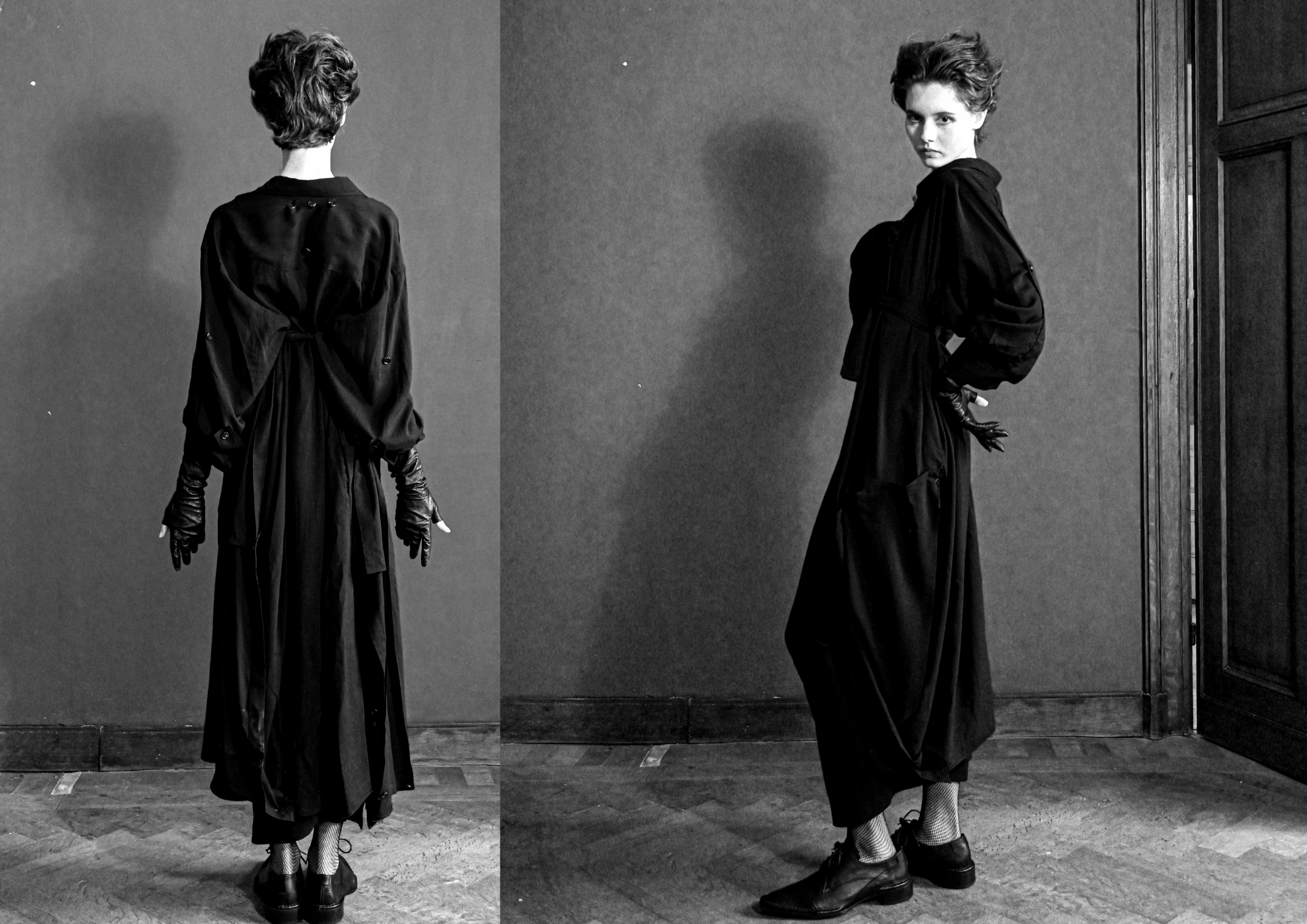
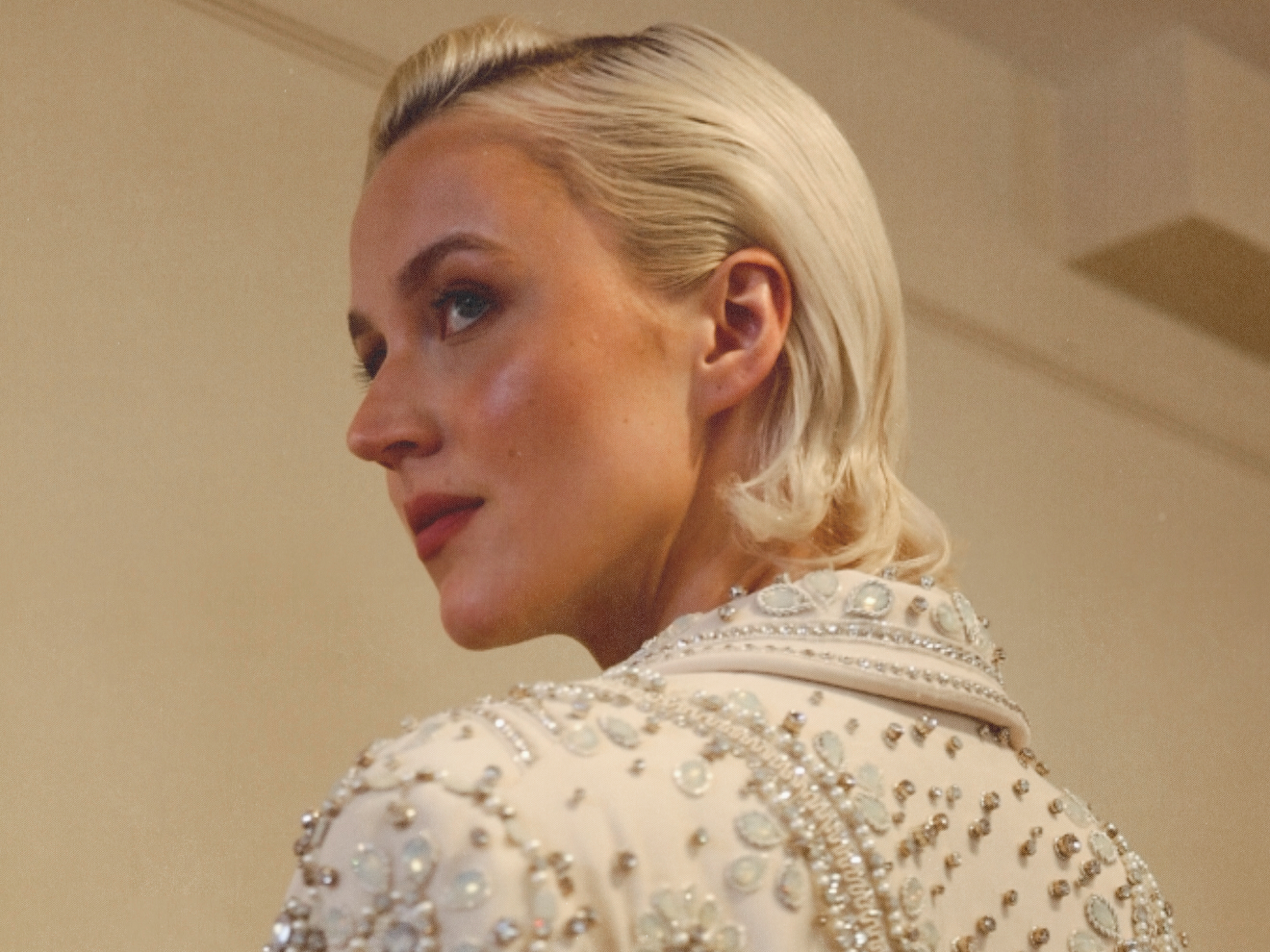
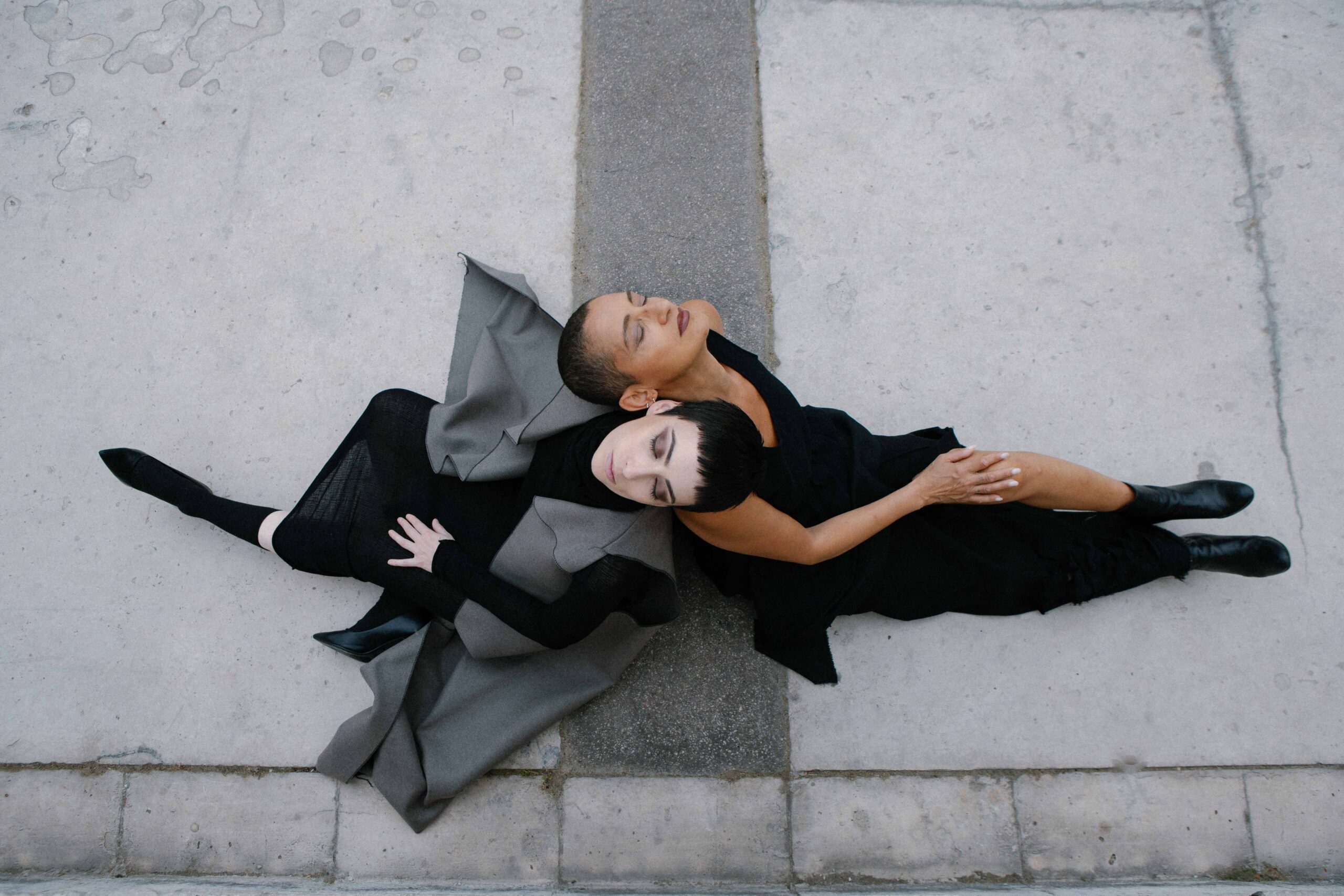
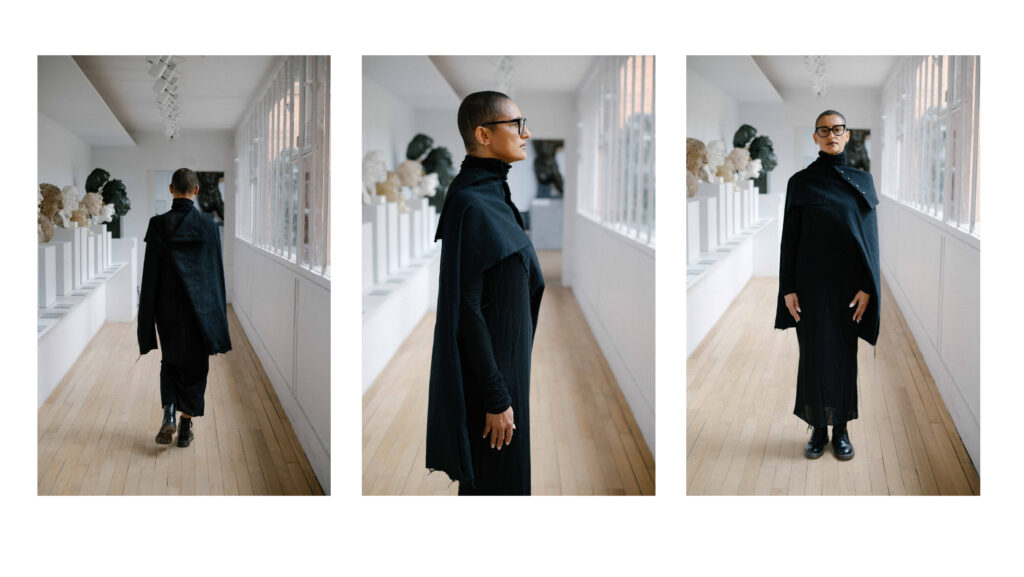
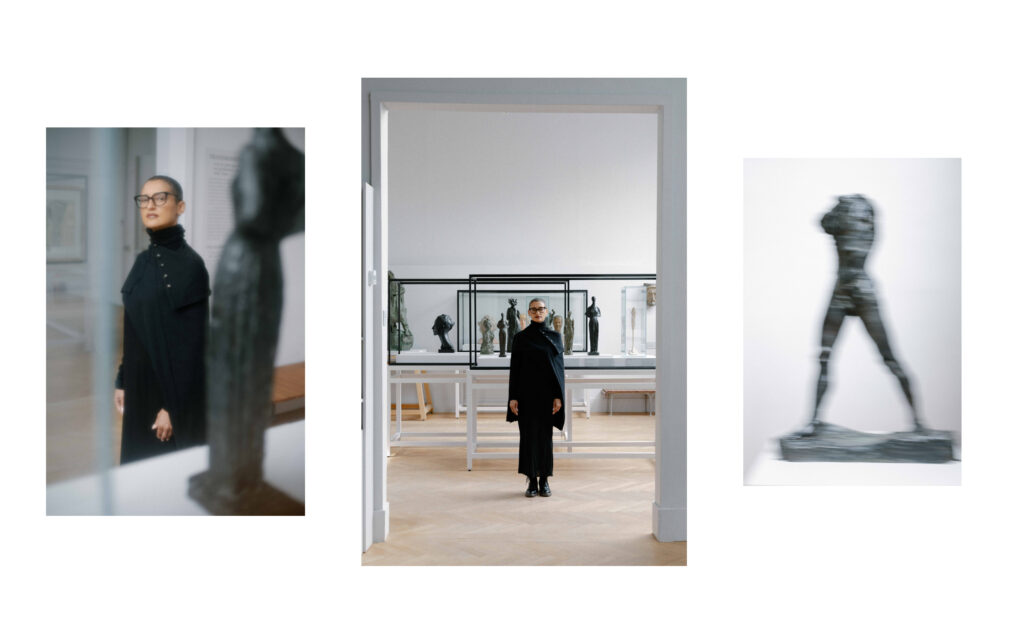
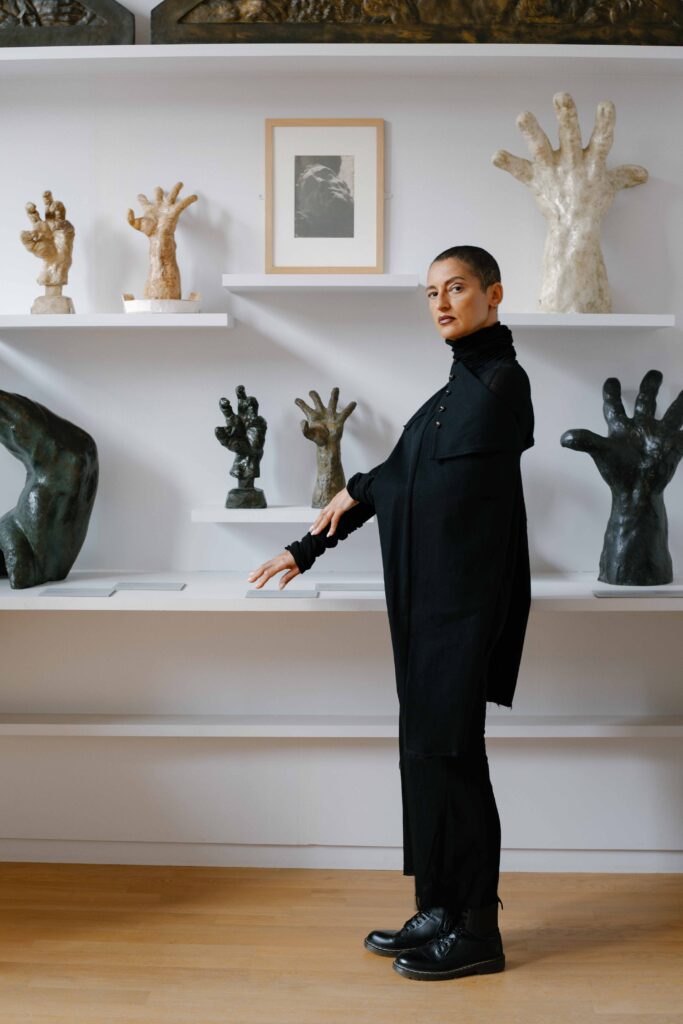
In article featured pictures from the exclusive editorial “The Triad of Art”.
Brand: @art259design Designer: @alberto_affino Creative Director&Producer : @illianaad Executive Producer&Editor in Chief: @tantanstolyarova Communication: @kibywonderland @fayercommunication Lead photographer: @vera.parisphoto Production assistant: @katepodar MUA&hairstyle Artist: @irina.gerard.muah Videographer&BTS Content Creators: @bubilda_ @illianaad Post-production @kibyswonderland Fashion Editor @oscarmunozaa Stylig&Set design: HCNInsider team Casting: @illianaad @tantanstolyarova Models: @ibamodel_ @krys_model