
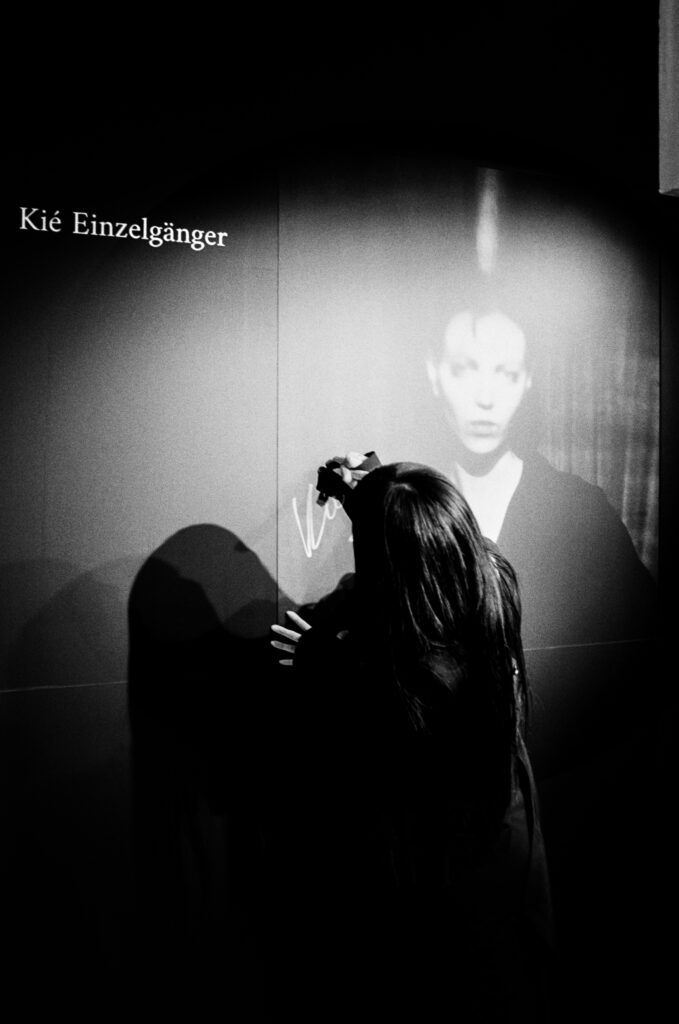
Interviewing Kié Einzelgänger feels like finding something rare in Antwerp. With a persona shaped by art history, introspection, and cross-cultural tension, this conversation isn’t about trends. It’s about identity and the quiet power of not staying unnoticed. And it’s not just Antwerp paying attention. Through her ongoing collaboration with WILDSIDE Yohji Yamamoto, Kié entered a dialogue with one of fashion’s most iconic outsiders. In a city where avant-garde is part of the DNA, she’s one of the few young designers keeping that spirit truly alive.
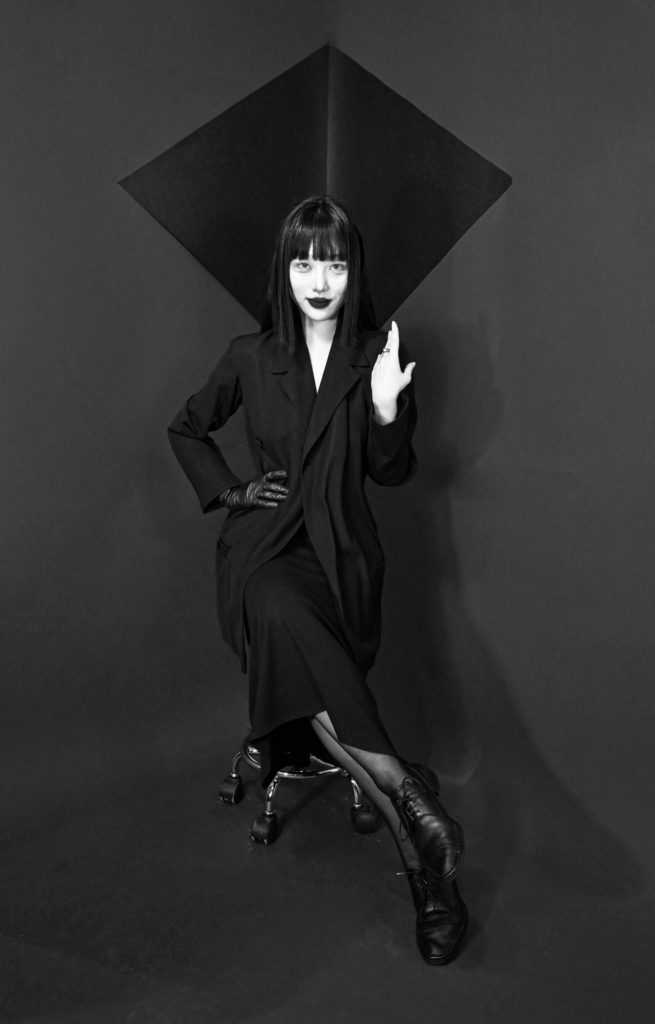
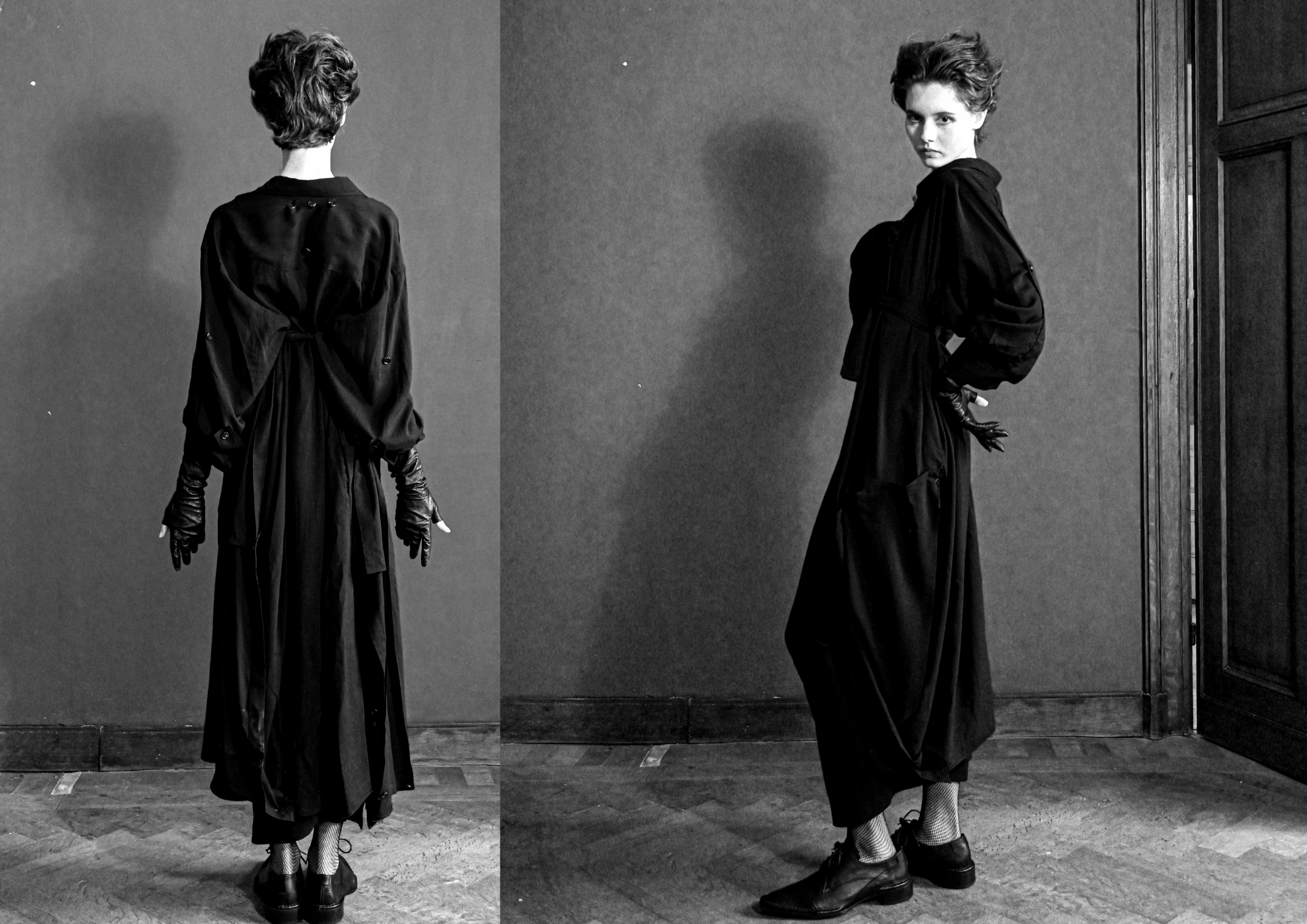
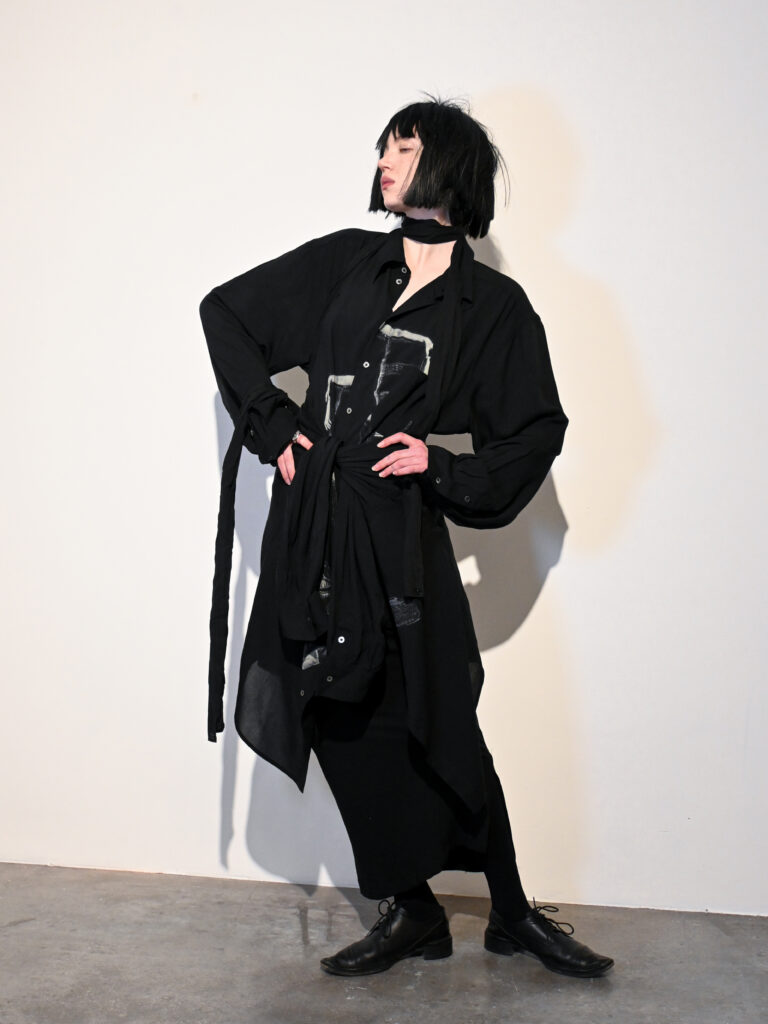
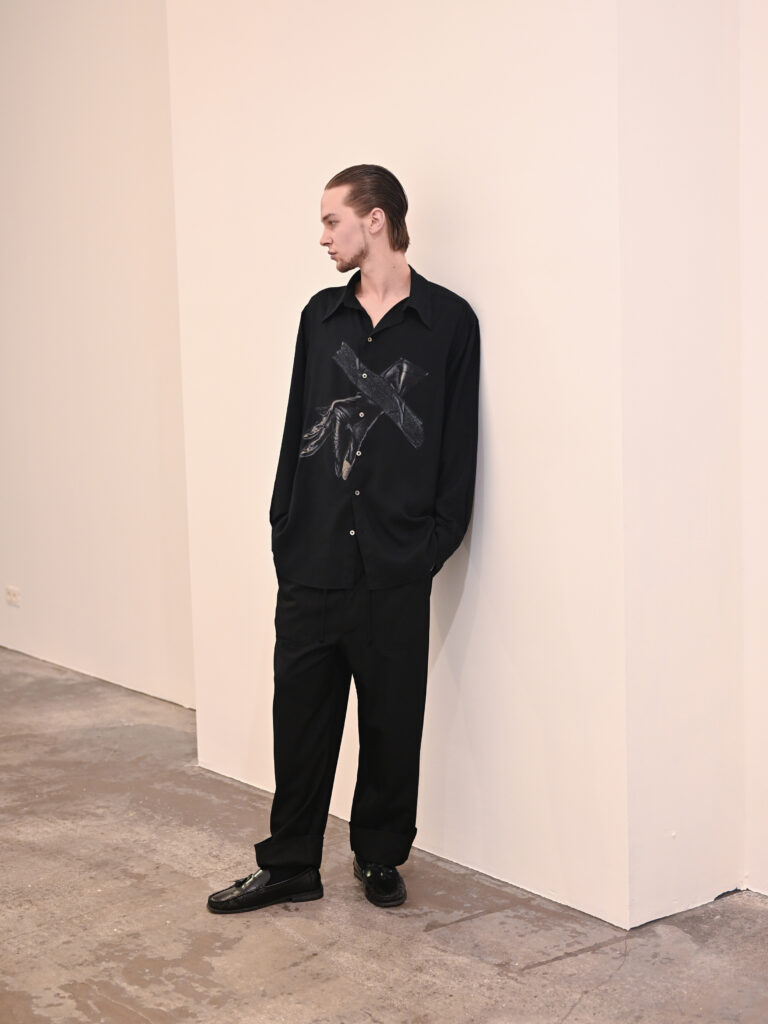
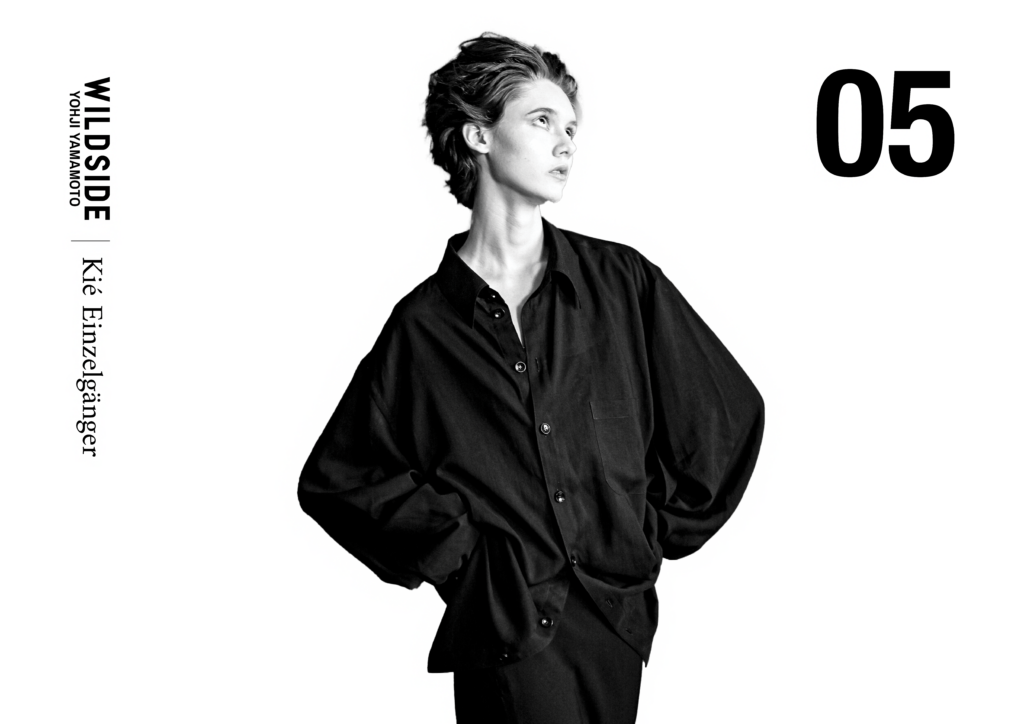
WILDSIDE Yohji Yamamoto x Kié Einzelgänger
“Einzelgänger” means “loner” or What does solitude mean to you personally and how does it translate into your work?
To me, it was never about loneliness. Rather than aligning with the current artistic climate, my brand instinctively positions itself in subtle opposition to it. Not as a resistance but a conscious decision. I distance myself from contemporary media and noise, not completely, because you still need awareness of your time. But enough to make sure I’m not repeating something unconsciously. That’s how my name became the natural foundation upon which my brand’s identity is formed. For me, Einzelgänger is about inner direction. That’s the core of everything.
You’ve lived between Switzerland, South Korea, New York, and nowAntwerp. How have these environments shaped your personal and creative identity?
In the early 2000s, after leaving Switzerland and moving to South Korea around the age of five, I struggled to adapt to Korea’s strong culture of standardization. While this system has its strengths, it can be restrictive for those do things differently. That experience shaped my skepticism toward the concept of trends. Although I understand their relevance, I never felt driven to align myself with them.
This mindset came with consequences. I experienced intense bullying when I was young. It pushed me toward cities like New York, Paris, and Antwerp — places where being different isn’t automatically punished, where individual voices can at least exist. In those cities you feel more openly acknowledged, or at least tolerated, within the creative landscape. So changing environments was never particularly difficult for me, because the objective was always clear. Each transition led me to a deeper understanding of what I needed to create in a meaningful way.
WILDSIDE Yohji Yamamoto x Kié Einzelgänger
You also reference the inter-war era, Surrealism, and Dadaism. Why that period and how do you translate those abstract art philosophies into wearable form?
It wasn’t calculated. I was just drawn to it. Even as a child, the visuals that fascinated me always traced back to the 1920s to 1940s. I am, by nature, a devoted researcher of Interbellum visual culture? Over time, it became my central aesthetic. In the meantime, I developed a deep admiration for comedies rooted purely in absurdity, a fascination that became academic. I spent countless hours at the New York University library, tracing genres and philosophical structures behind this so called ‘absurdity’ and even wrote a thesis about it. What drew me most was the honest portrayal of human emotion, and the way ordinary objects could be reframed simply through a shift in perspective.
Do you see yourself more as an artist who designs clothing, or as a designer who approaches fashion as an art form?
The term artist is something I have always struggled to fully understand. In order to avoid bankruptcy, it became inevitable for me to evolve into an entrepreneur-minded director. We live in the 21st century, where surviving purely as an artist, or even solely as a designer, is no longer realistic unless one is already financially supported. The word designer sits slightly closer to that economic reality, so I am a designer, not out of romance, but out of honesty.
WILDSIDE Yohji Yamamoto x Kié Einzelgänger
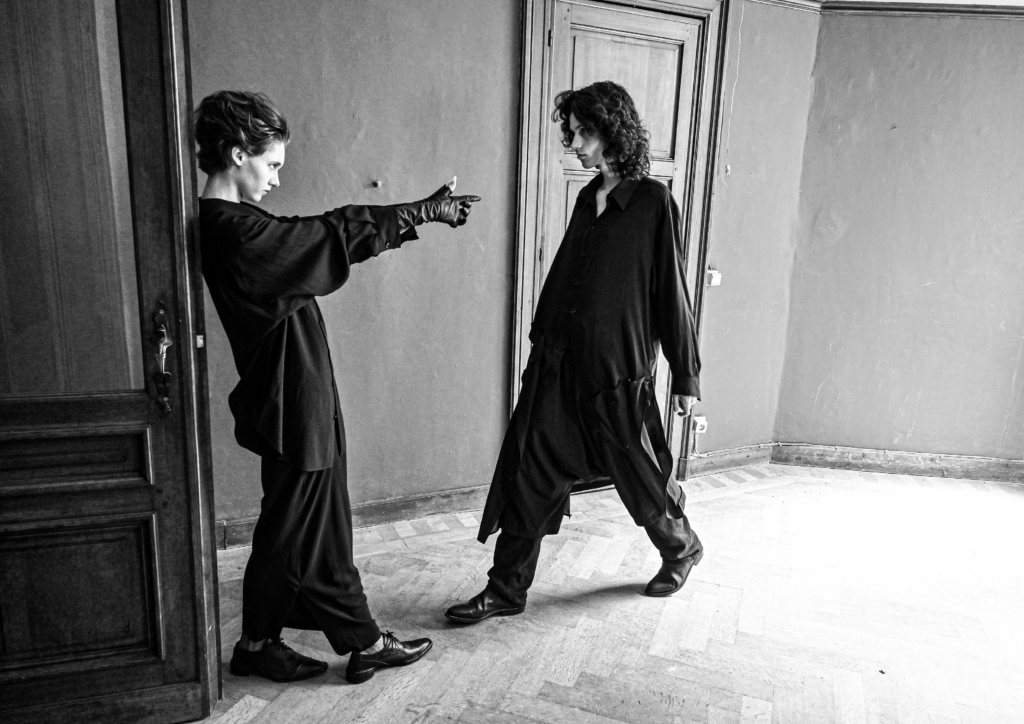
As the word Einzelgänger suggests, I built everything on my own. Today, I am fortunate to have a team beside me, but until a few years ago, every layer was carried alone. The truth is that I exist somewhere in between and perhaps outside of both. I am responsible from zero to hundred, administration, accounting, production, technical execution, detachment from culture, attachment to new research, and creation itself. Without this way of working, survival would be impossible. It is the only way I can continue.
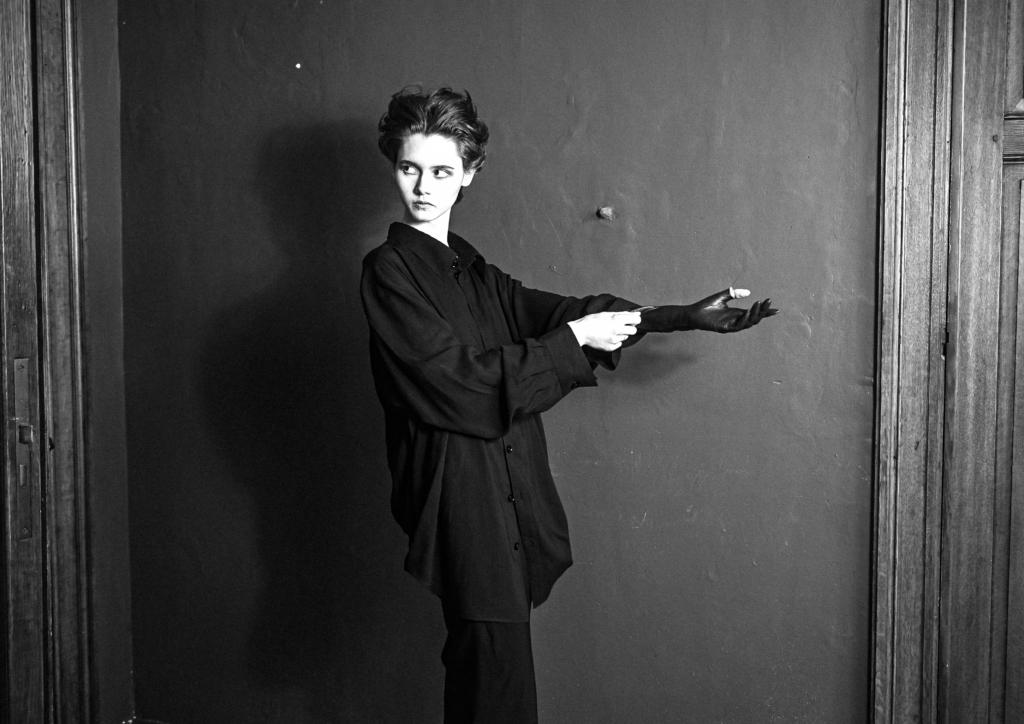
WILDSIDE Yohji Yamamoto x Kié Einzelgänger
Your collaboration with Wildside Yohji Yamamoto has been widely noted. What do you learn from working with Yohji’s world?
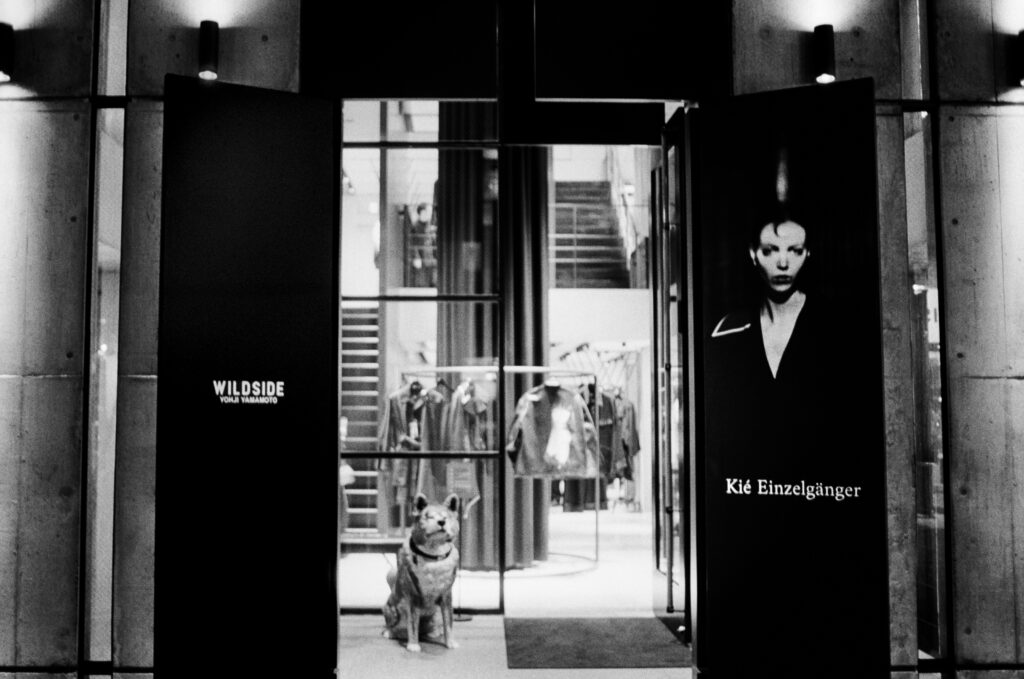
One of the most profound lessons I took from that experience was the concept of uniformity, not visually, but spiritually. What surprised me most was realizing that you can contribute to something larger without losing yourself. You don’t have to compromise your integrity to collaborate. A deeply challenging and fulfilling experience, if i may say so.. That collaboration reshaped my understanding of teamwork and taught me how much there is to learn through other people’s perspectives, experiences, and ways of thinking.
WILDSIDE Yohji Yamamoto x Kié Einzelgänger
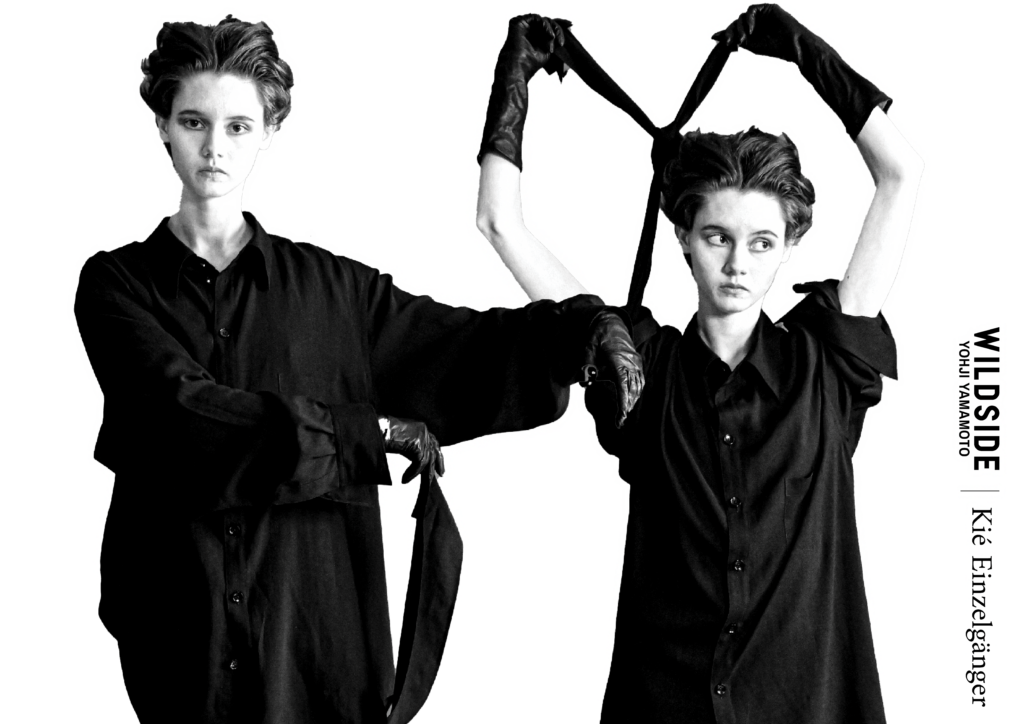
What I fundamentally respect, and continue to learn from is the discipline and integrity embedded in their way of working. In many ways, our generation lacks this depth of commitment. I feel genuinely fortunate to be influenced by it every single day. It constantly reminds me how much discipline must be earned, not assumed. That realization keeps me grounded, and moving forward.
You often work with Japanese production and fabric. What draws you to Japanese craftsmanship?
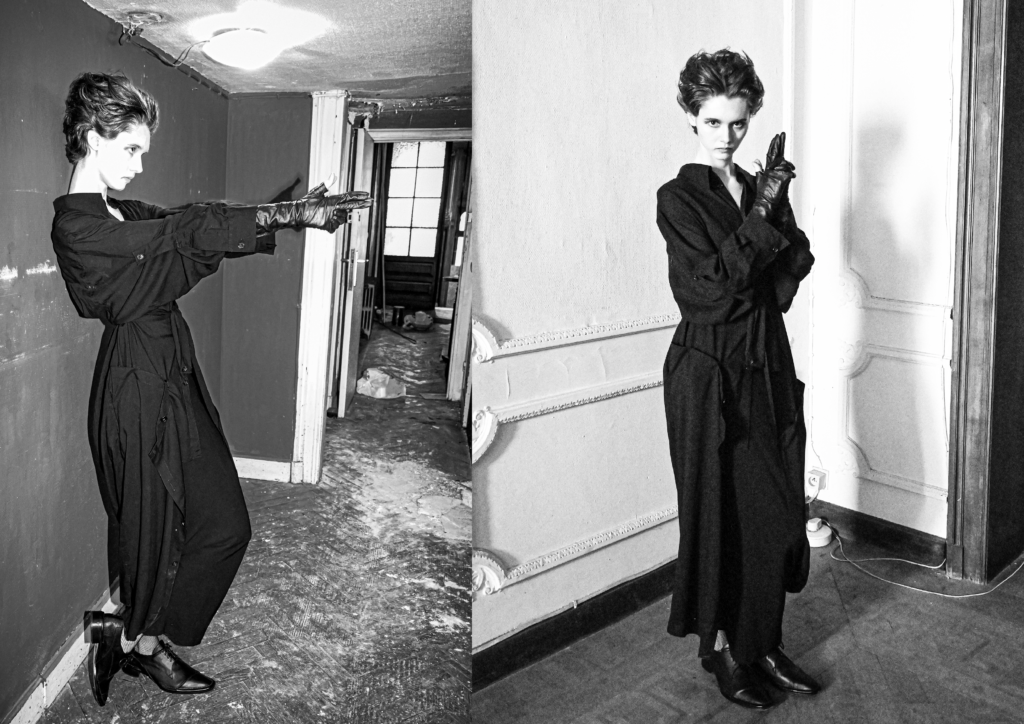
By now, I have built nearly nine years of long-standing relationships with sourcing and production partners in Japan. What I fundamentally respect, and continue to learn from is the discipline in their way of working. It is something I find endlessly compelling. There are no empty promises, no shortcuts, no performative efficiency. Everything is structured, precise, and sustained through daily discipline.
WILDSIDE Yohji Yamamoto x Kié Einzelgänger
What direction do you envision for Kié Einzelgänger in the next five years, conceptually and geographically? Would you ever consider expanding into other disciplines?
From 2026 onward, I am intentionally engaging in fine art practice alongside fashion production, exhibiting through fine arts galleries in parallel with my own seasonal collections. Designers are often forced to move forward before a story has fully formed. I don’t believe fashion and fine art need to be separated. They can coexist — though it will slow me down. And that’s a conscious choice. While fashion must continuously advance, fine art allows for a pause in a space where intentions can exist before being overtaken by time.
WILDSIDE Yohji Yamamoto x Kié Einzelgänger
Looking forward, she reveals a new chapter: from 2026 onward, she plans to expand into fine art, using it as a space to pause, reflect, and reclaim narrative in a fashion system that rarely slows down. That next chapter is already unfolding. In March 2026, she will present her “Evidences” Printed Shirts Series alongside a solo exhibition in Antwerp with Tommy Simoens Gallery — a sharp, conceptual crossover where shirts become sculptural objects and fine art prints sit next to AW26–27 pieces.
WILDSIDE Yohji Yamamoto x Kié Einzelgänger
Imane Boufath, Fashion Editor