
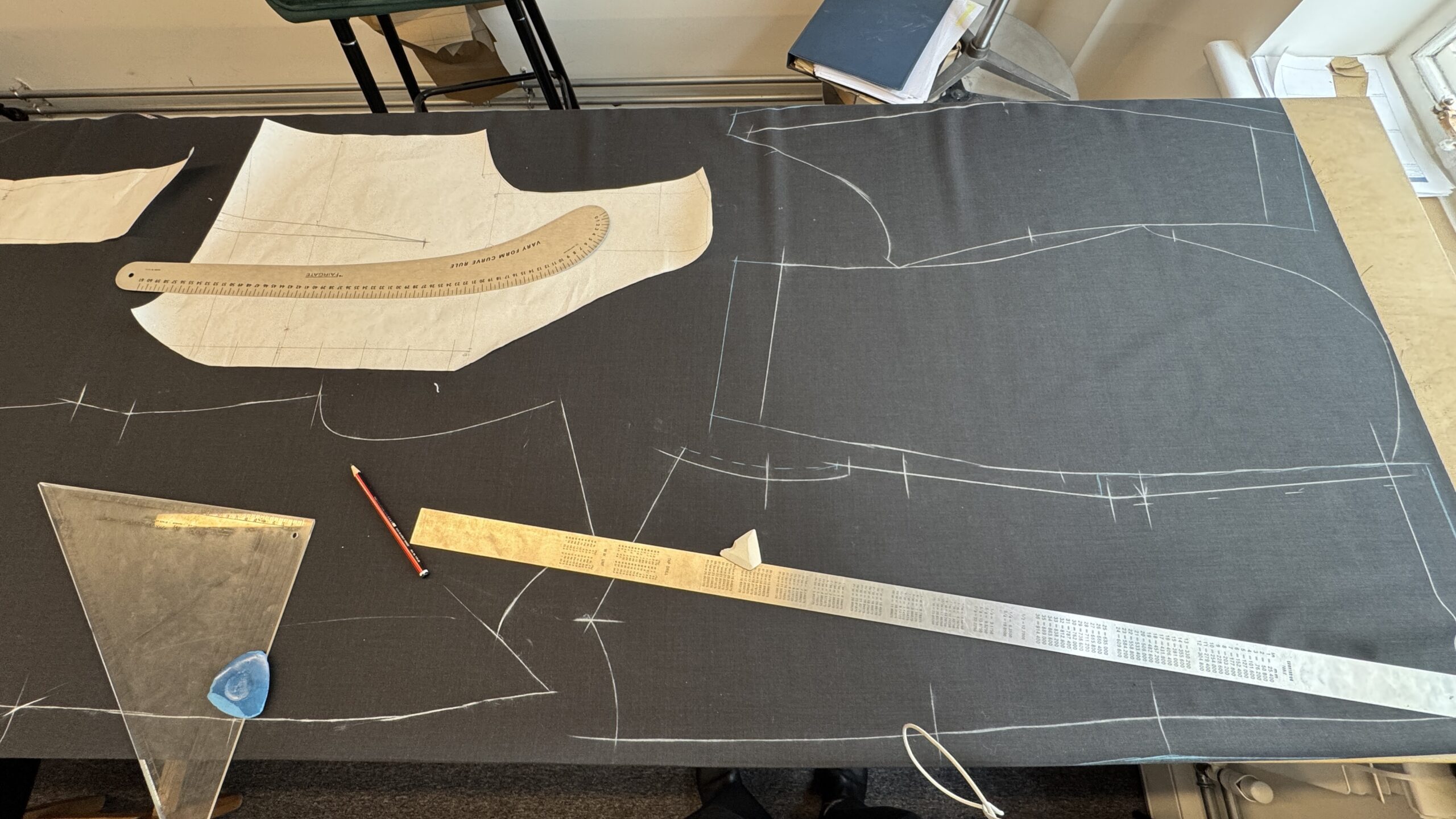
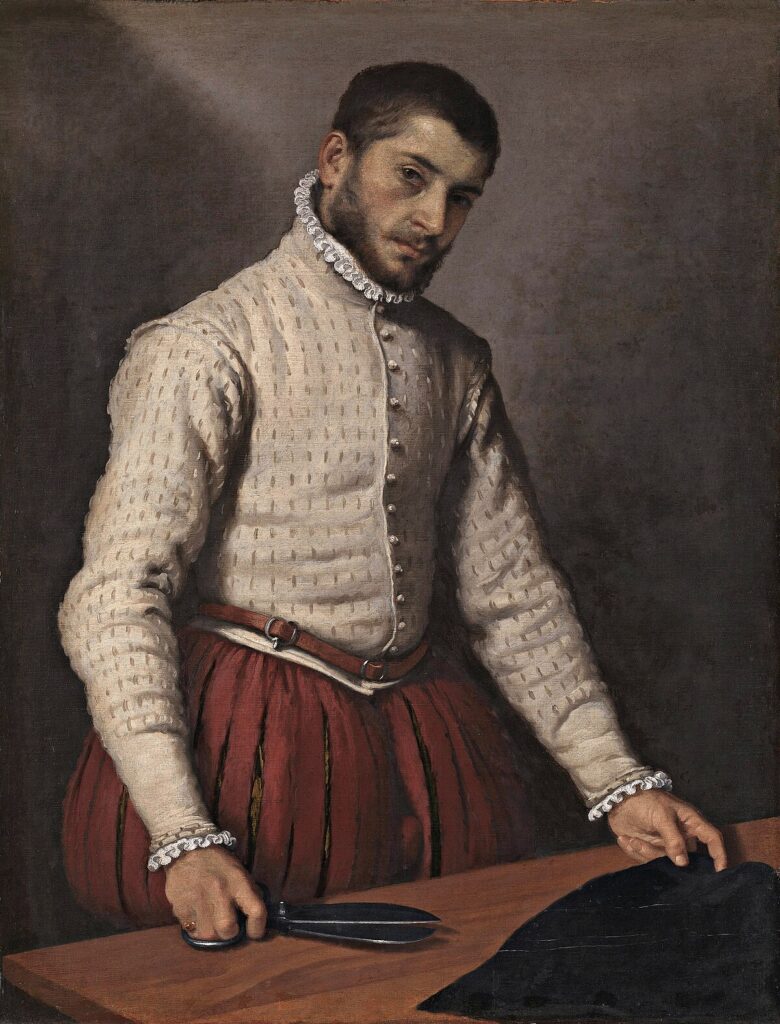
The term “bespoke” which we apply today when talking about fine tailoring has its origin in Savile Row, a street in London’s Mayfair historically known for its tailors. “Fashionable address” since its very origin thanks to its noble residents (back to the 18th century), the place has the reputation of being almost inaccessible for the “common mortals” clients as you have to be privileged to be able to order a piece of cloth here.
The Savile Row Bespoke Association was founded in 2004 to protect and develop bespoke tailoring. The member tailors are typically required to put at least 50 hours of hand labour into each two-piece suit. However, currently the term may also be applied to machine-sewn garments, provided they are made-to-measure.
Alisa Dylevy, a first-year student at the Central Saint Martins design college had a chance to undergo a two-month summer internship in one of the tailors of Savile Row. Here is our conversation with Alisa unveiling her experience in this “sacred place”.
- When did you first hear about Savile Row? Was it in your college?
When I was first learning about fashion and trying to understand the whole ideology of the industry, Savile Row kept coming up as the peak of craftsmanship and bespoke garments. It wasn’t something I discovered in college, but more during my own time exploring and reading about fashion history, especially the London Fashion History. It became a reference point for me as the excellence in tailoring and the tradition of true bespoke work. From the moment I learned about Savile Row, it instantly became a dream of mine to one day learn their craft.
- Why did you choose to get an internship in one of the Savile Row tailors (and not in some modern and less elitist brands)? What was your driving reason?
I knew it would give me the strongest foundation in the fundamentals of pattern drafting, fittings, and truly understanding the human body. What sets Savile Row apart is the level of detail and precision you’re not just working with standard sizes like small or medium, but with real people, each with their own posture and proportions, whether that’s bow legs or a dropped shoulder. That kind of intimate understanding of fit and craftsmanship is something I believe you can’t get from typical fashion brands. Another reason is the pace. In many modern or so-called ‘elitist’ brands, the process is often too fast, driven by production and deadlines, so you don’t really get the chance to learn deeply. Don’t get me wrong, there is a deadline on everything, but on Savile Row, there are no excuses for you not getting it right. It’s very intense. On Savile Row, the slowness is intentional, it’s about patience.
- After 2 months of complete internship, what is your main takeaway from the training you have learned?
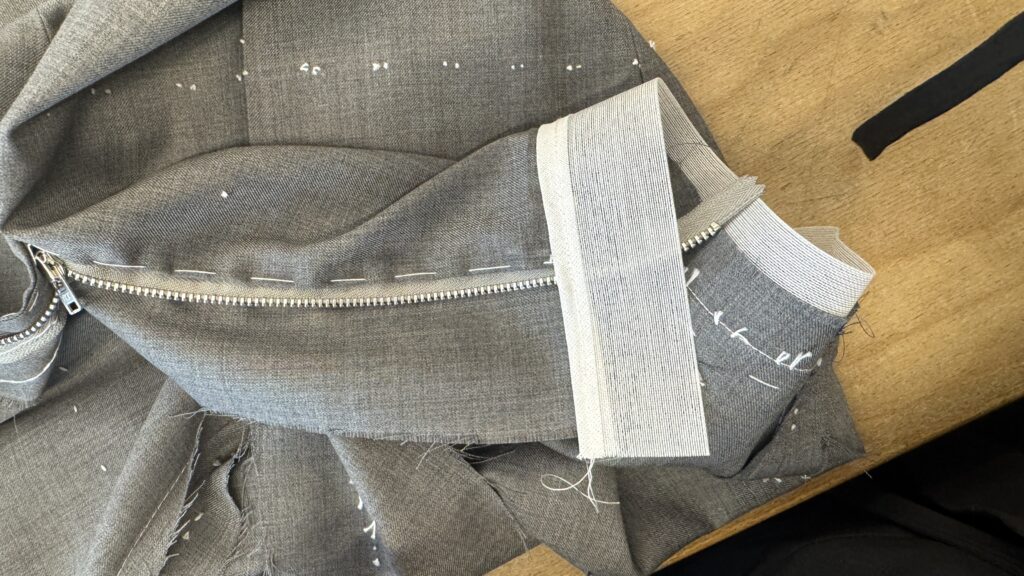
There should never be an excuse for not getting it right. Laziness or lack of knowledge does not exist. You made a mistake, unstitch, redo it all again. Measurements are everything, and observation is second. You can make a great three-piece suit, but fittings will actually fuck you over, and you will have to go back to stage zero all over again. Fittings are everything because now you actually have the person in the suit, and you are making it on them for them. And it’s an underrated craft, and the people working there full-time need their flowers.
- As a student of Central Saint Martins, can you tell us how much time you spend on learning the technique in college?
It’s not much, really. It’s mostly about learning how to think and be creative. There is a greater emphasis on creative thinking and less on technical training, with a focus on approaching design in innovative ways. We’re encouraged to develop our own voice as designers rather than simply perfecting technique. Technical skills are something we’re expected to seek out and build on our own, outside of the university. The idea is that once you understand how to think differently, you can apply that mindset to whatever craft or skill you choose to pursue.
- What should someone very keen to get an internship at Savile Row’s tailor know?
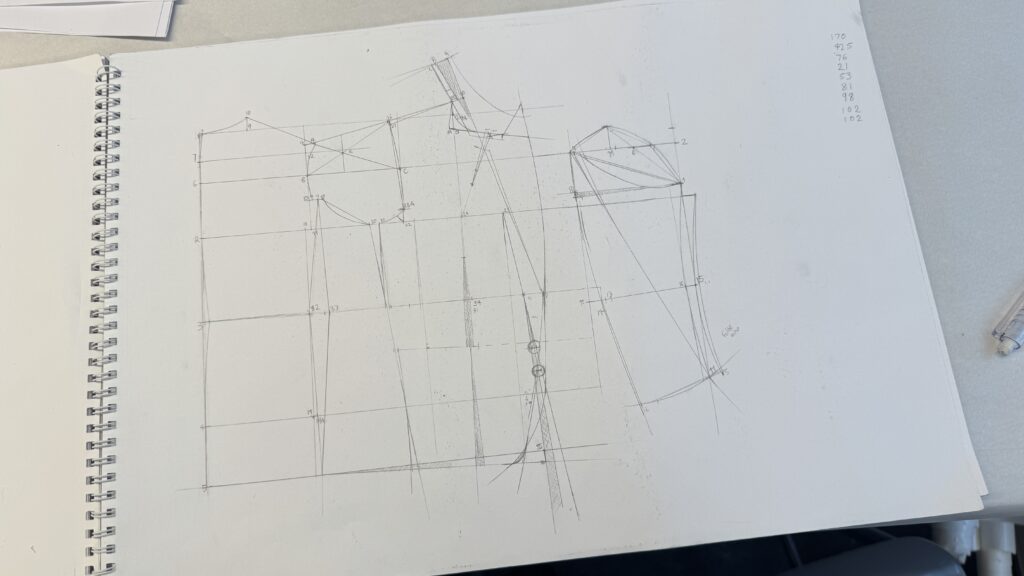
I think the most important thing to know is that Savile Row is about patience, discipline, and respect for tradition. It’s not glamorous in the way people might imagine. It’s a lot of it is repetition and precision. It takes a lot of patience with yourself and being honest with yourself on how you can make the garment better.
- In the modern world given the current condition of the fashion industry and particularly the luxury segment of it, what are the perspectives of made-to-measure tailoring? Do you feel that there will still be a need for such unique (and expensive) craftsmanship?
A bespoke tailored suit will always have a place, if you can afford it, it’s the highest form of luxury. Nothing fits better than a garment made exactly for your body, taking into account all the small details that ready-to-wear can’t. The challenge is that fewer people today really know about it or see it as special, since fashion has become so trend-driven. What also makes Savile Row unique is the history behind each house and the secret processes every tailoring shop protects; that’s a tradition you can’t replicate in mass fashion. There’s also the openness to adjust or refit a suit even years later, which makes it a living garment rather than something disposable. A well-fitted suit never goes out, and that’s why Savile Row will always stand apart, it represents timeless quality rather than passing trends.